How Magic Tricks Can Help Kids Tackle Bullying
- Categories How Magic Change lives, Uncategorized
The Unseen Power: How Magic Tricks Can Help Kids Tackle Bullying
Bullying is a pervasive issue that affects countless children, leaving lasting emotional scars. While traditional anti-bullying programs are vital, an often-overlooked tool can significantly empower children and de-escalate conflict: magic tricks. Far from mere entertainment, magic can be a potent force for good, reducing bullying through a trifecta of methods: educational entertainment, personal skill-building, and clever psychological responses.
1. Educational School Assemblies: A Spell for Awareness
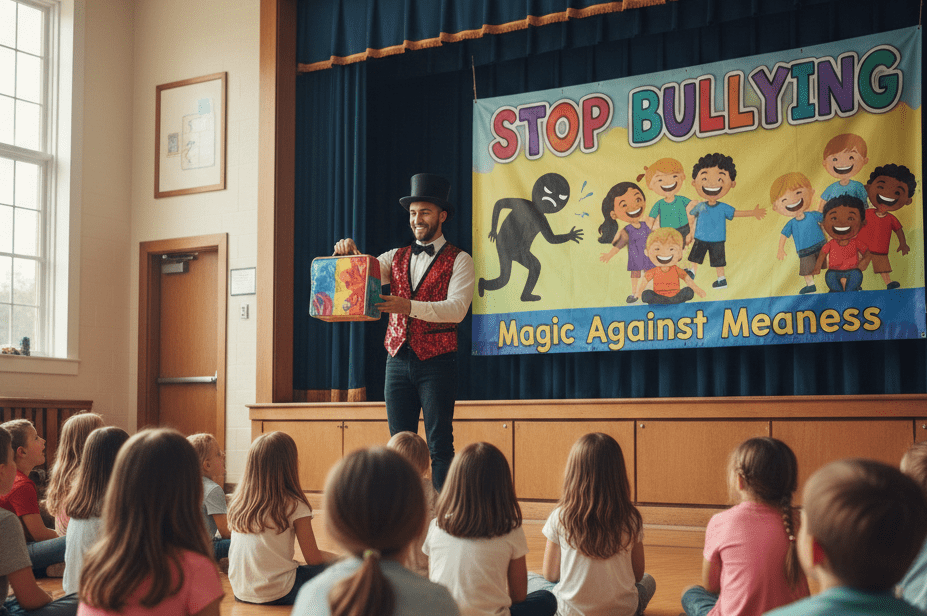
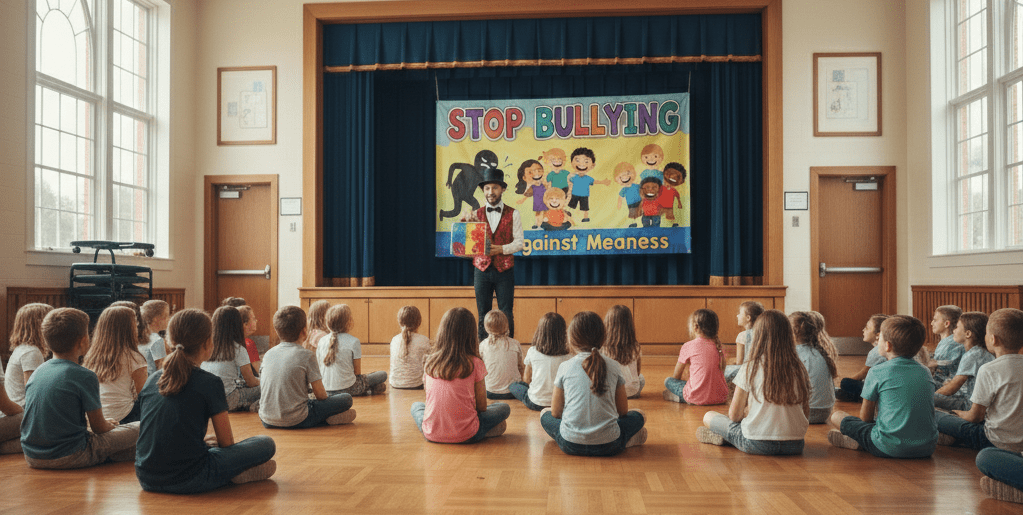
Imagine a classroom where students aren’t just listening to a lecture, but are captivated by a magic show that subtly weaves in powerful anti-bullying messages. Many professional magicians now utilize “anti-bully magic shows” to teach children how to identify and effectively handle bullying situations.
Visual Aids: Magic acts are inherently visual, making them perfect metaphors for abstract concepts. A magician making a divided handkerchief whole again can illustrate inclusivity, while a trick involving seemingly hurtful words disappearing into thin air can highlight the impact and eventual fading of negativity.
Engagement: The interactive and wonder-inducing nature of a magic show ensures students are “laser-focused” on the performance and, by extension, the underlying message. This makes anti-bullying lessons far more memorable and impactful than a standard, passive lecture.
Reporting Strategies: Shows often incorporate specific tricks to demonstrate crucial anti-bullying strategies. For instance, a magician might use a prop like a lunchbox to illustrate the importance of reporting incidents to teachers or trusted adults, rather than resorting to aggression, which often escalates the situation.
2. Personal Empowerment and Social Status: From Target to Talent
For a child who is frequently targeted by bullies, learning and performing magic can be a transformative experience, fundamentally shifting their social dynamics.
Confidence Building: The dedication and practice required to master a difficult sleight-of-hand trick directly translate into enhanced self-esteem. This is particularly beneficial for children who may struggle with other areas, such as those with disabilities or ADHD, giving them a unique avenue for achievement and recognition.
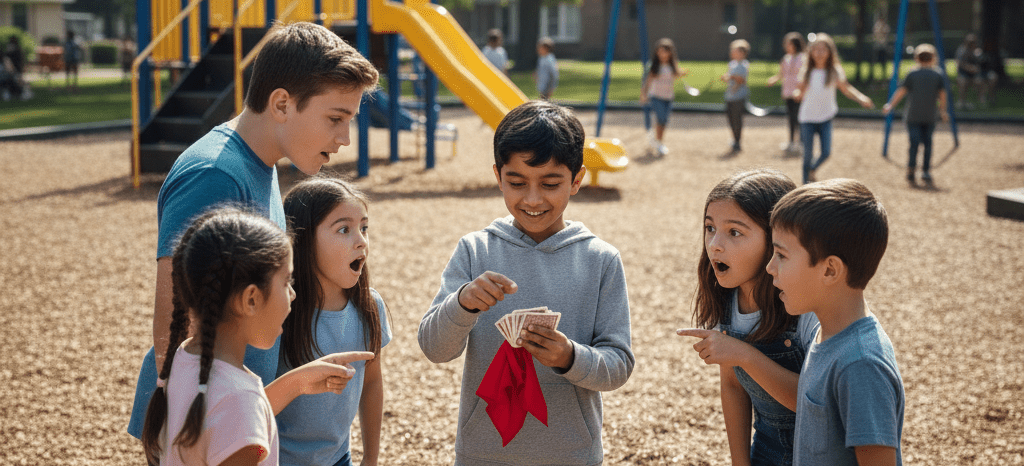
Increasing “Playground Status”: Becoming known as the “kid who does magic” can dramatically alter a child’s social standing. Instead of being perceived as an easy target, they become an interesting and unique peer, attracting new friends and positive attention.
Human Connection: Magic acts as a powerful bridge between people. A successful trick often elicits positive emotions like wonder, surprise, and laughter. These shared moments can create genuine human connections, potentially disarming a bully by establishing an unexpected bond or positive interaction.
3. The “Magic Response”: A Psychological Shield
Beyond the performance, there’s a psychological technique that psychologists sometimes refer to as a “magic response.” This involves using specific verbal strategies to prevent accusations or taunts from escalating into full-blown bullying.
Resilience: The core idea is to equip children with the ability to “laugh it off” or to employ assertive phrases that signal to the bully that their words hold no power. This doesn’t mean ignoring the bullying, but rather responding in a way that deprives the bully of the desired reaction.
Reframing Fear: Think of Harry Potter characters using the “Riddikulus” spell to transform a terrifying Boggart into something comical. Children can be taught to mentally reframe their bullies – to see them not as all-powerful figures of fear, but perhaps as insecure individuals, thereby reducing their own emotional distress and impact of the bullying.
These applications of magic, from engaging educational shows to personal empowerment and clever psychological techniques, demonstrate its remarkable potential to foster confidence, create positive social interactions, and ultimately deter bullying.
Are you looking to equip your child with these invaluable skills?
Consider exploring Learn the Art of Magic – a school dedicated to teaching children the art of magic, fostering confidence, creativity, and essential social skills that can help them navigate the challenges of childhood, including bullying.
You may also like
What Does it Actually Mean to Be a Magician?
What Defines a Professional Performer?