
How Creative Arts Build Confident Kids
- Categories Face Painter, How Magic Change lives, How to do Magic
How Creative Arts Build Confident Kids
As parents, we all want our children to grow into confident, resilient individuals, ready to tackle the world. But in a world increasingly focused on test scores and structured activities, are we overlooking a powerful tool right under our noses? The answer, surprisingly, might lie in a paintbrush, a lump of clay, or even a simple piece of paper.
Many children struggle with self-doubt, fear of failure, or difficulty expressing themselves. They might shy away from new challenges, struggle in social settings, or simply feel unsure of their own ideas. This isn’t just a phase; it’s a problem that can impact their academic performance, social development, and overall well-being.
The solution? Engaging with creative arts.
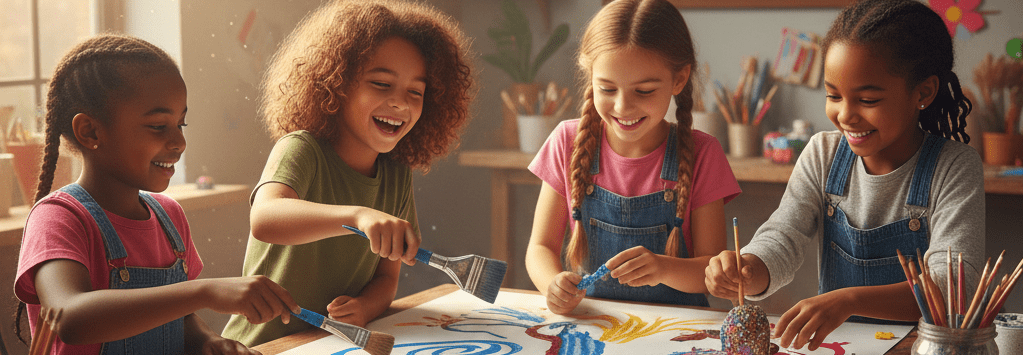
Creative art, in all its forms, provides a unique and potent pathway to boosting a child’s confidence. It’s not just about creating a pretty picture; it’s about the profound psychological and developmental benefits that unfold in the process.
Why Art is a Confidence Superpower for Kids
Here’s how engaging with creative arts directly tackles common childhood challenges and builds unwavering confidence:
Solving the “I Can’t Do It” Problem: Sense of Accomplishment & Pride Every time a child finishes an art project, whether it’s a vibrant drawing, a carefully constructed sculpture, or a handmade card, they hold tangible proof of their skills and effort. This immediate, visible result fosters an incredible sense of accomplishment and pride, directly boosting their self-worth. They learn, “I can do it!”
A Safe Space for Big Feelings: Safe Self-Expression Children, especially younger ones, often lack the words to express complex emotions. Art provides a non-judgmental outlet where they can explore anger, joy, sadness, or confusion through colors, shapes, and textures. This process helps them understand and process their feelings, leading to greater emotional confidence and self-awareness.
Turning “Mistakes” into Masterpieces: Overcoming Challenges In art, there are no true failures, only opportunities for discovery. A spilled paint pot can become a new technique; a crooked line can lead to an abstract design. Art teaches children to navigate unexpected outcomes, adapt, and find creative solutions. This resilience is invaluable, transforming the fear of making mistakes into a willingness to experiment and learn.
Empowering Little Leaders: Independent Decision-Making Should I use blue or green? What material works best here? How do I want my drawing to look? Art projects constantly prompt children to make their own choices. These decisions, big or small, empower them, increasing their self-reliance and trust in their own judgment.
Building Bridges, Not Walls: Social Confidence Collaborative art projects, whether in a classroom or at home, encourage communication, sharing, and teamwork. Children learn to articulate their ideas, listen to others, and work together towards a common creative goal. This naturally enhances their communication skills and fosters comfort in group settings.
Celebrating Uniqueness: Development of a Unique Voice No two pieces of art are ever exactly alike, even when given the same instructions. Art encourages children to embrace their individual perspectives and express their unique ideas. This process nurtures a strong sense of identity, helping them gain confidence in their own abilities and viewpoints.
Beyond the Easel: Real-World Impact
The ripple effects of these confidence-building benefits extend far beyond the art studio. Children who are confident in their creative abilities often show improved academic performance, reduced stress, and a greater willingness to engage with new experiences. They become more innovative thinkers and more emotionally intelligent individuals.
You may also like
What Does it Actually Mean to Be a Magician?
What Defines a Professional Performer?